
Ensuring Quality and Safety for Household Goods
Dec 12,2025
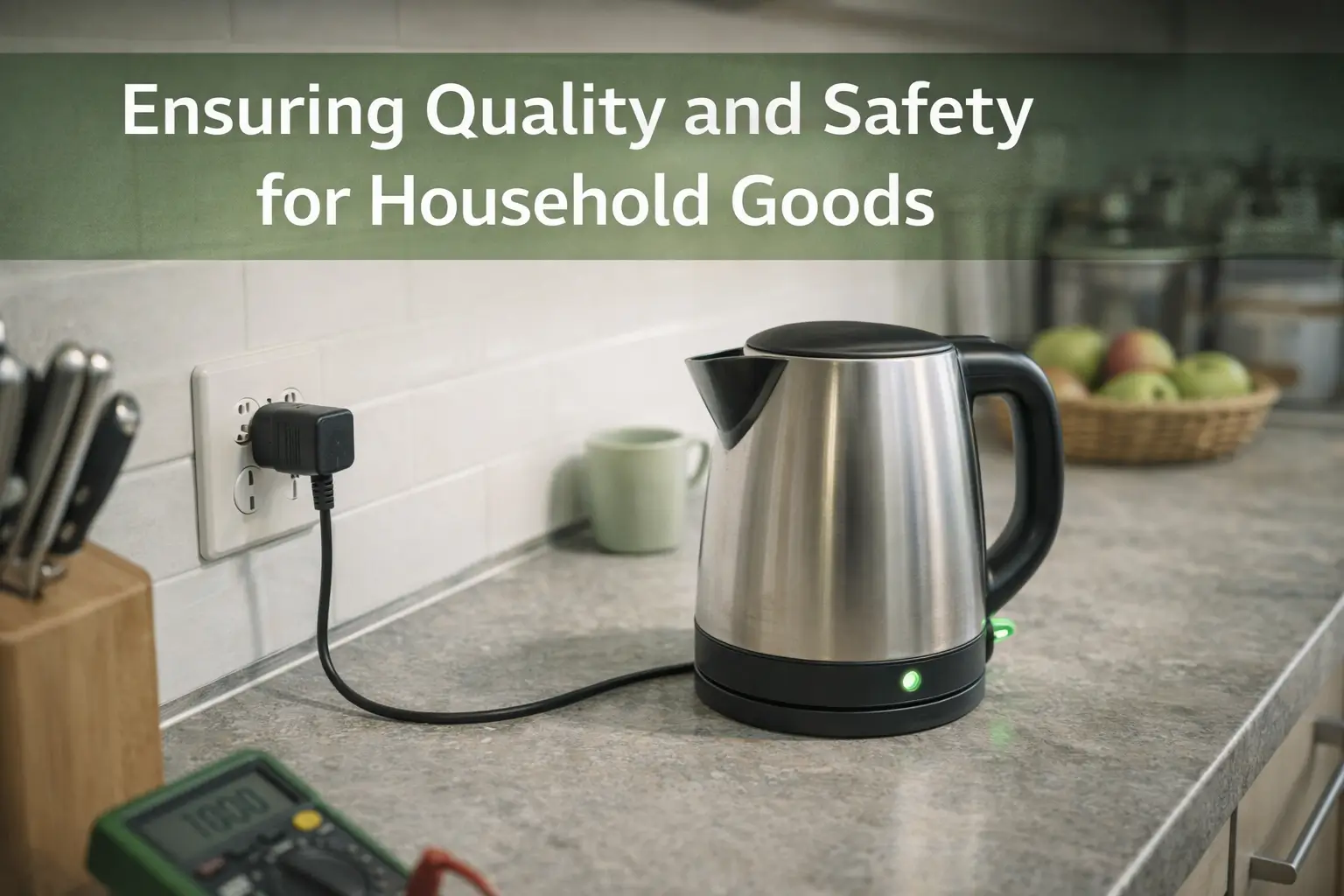
Have you ever wondered if the home furnishings you sell or use daily truly meet safety and quality standards? From kitchen appliances and electronics to furniture and decorative items, home furnishings encompass a wide range of items we rely on in our daily lives.
For importers and retailers, ensuring quality and safety is not only the right thing to do, but also crucial for customer satisfaction, compliance, and long-term business success.
In this guide, we’ll cover what constitutes home furnishings, the most common quality and safety risks, why rigorous quality control is essential, product safety standards, and practical methods for checking and improving the safety of home furnishing products.
What Are Household Goods?
Household goods generally refer to consumer products designed for use in and around the home. This includes furniture, appliances, kitchenware, electronics, home décor, and other everyday domestic items.
From sofas and dining tables to refrigerators, microwaves, cookware, lamps, and cleaning tools, these products are expected to be safe for regular use and durable enough to withstand typical home environments.
Before household goods reach store shelves or customers’ doorsteps, they should meet defined quality benchmarks and safety requirements. For importers and retailers, understanding this scope helps ensure the right quality control approach is applied to each category.
Common Quality and Safety Risks in Household Goods
Poorly designed or manufactured household products can create serious hazards. One common issue is structural failure in furniture. Weak joints, poor materials, or improper assembly can cause items to collapse or tip over, posing a particular risk with tall or top-heavy furniture such as dressers and bookshelves.
Sharp edges and detachable small parts are another concern. Unfinished edges or loose components may cause cuts or choking hazards, especially in children’s products.
Electrical and fire hazards are critical risks for home appliances and electronics. Faulty wiring, inadequate insulation, poor grounding, or overheating components can lead to electric shock or fire.
Even simple items like kettles, toasters, or power strips can become dangerous if quality is not properly controlled.
Chemical risks are often difficult to detect, but they are equally serious. Unsafe paints, adhesives, foams, or coatings can release harmful substances, while non-compliant food contact materials can leach chemicals into food.
Functional failures, such as overheating of appliances, malfunctioning safety locks, or products not performing as expected, also constitute quality and safety risks.
Identifying these issues early through design review, inspection, and testing is essential to preventing problems before products reach consumers.
Why Quality Control Matters for Household Goods?
Rigorous quality control plays a crucial role in ensuring consumer safety, reducing the risk of accidents and injuries. Furthermore, it helps businesses avoid costly recalls, regulatory penalties, import delays, and legal proceedings, expenses that often far exceed the cost of proper inspection.
Consistent quality helps maintain brand reputation, reduce returns and complaints, and build long-term customer trust. In addition, quality control ensures that products meet specific market requirements, covering areas such as electrical safety, mechanical performance, chemical restrictions, and labeling.
Key Safety Standards for Household Goods
Household products vary depending on the product type and target market, and must comply with different standards. For household appliances, the IEC 60335 series of standards is a widely recognized reference standard, covering risks such as electric shock, overheating, fire, and mechanical failure.
In the United States, products typically need to meet recognized safety standards and certification pathways. In the European Union, CE certification requirements under relevant directives are required.
Furniture standards usually focus on strength, stability, and durability, and sometimes flame retardancy. Children’s products face stricter chemical and mechanical safety requirements. Kitchenware and food contact materials must meet the material safety and migration limits specified in applicable regulations.
Before production begins, it is essential to confirm which standards apply to your specific product and target market.
Quality Inspection Methods for Household Goods
Quality and safety are achieved through multi-stage, structured inspection and testing. This typically includes pre-production inspection to verify raw materials and components; in-process inspection to identify problems early; and pre-shipment inspection to assess the finished product. Container loading supervision further ensures the correctness of quantity, condition, and loading method.
Since comprehensive inspection is rarely feasible, sampling based on Acceptable Quality Levels (AQLs) is usually used to determine sample size and acceptable defect limits.
Product-specific checklists guide inspectors in visual inspection, dimensional verification, functional testing, and basic safety assessments. For high-risk products, laboratory testing may be required to confirm compliance with chemical, electrical, or flammability requirements.
Clear inspection reports, including photographs, defect classifications, and pass/fail conclusions, help in making informed shipping decisions.
Quality Control by Household Goods Category
Different product types require different QC focus. Furniture inspections emphasize strength, stability, sharp edges, surface finish, and hardware installation. Home appliances and electronics require functional testing, wiring checks, safety feature verification, and labeling review.
Kitchenware inspections often focus on cracks, coatings, handle strength, fit and finish, and packaging protection, with additional checks for food-contact safety where required.
The principle remains the same across categories: identify what could fail or cause harm, then verify it through inspection and testing.
Best Practices to Ensure Household Goods Safety
Effective safety management begins at the design phase. Prioritize safety from the start and partner with suppliers who maintain proven quality systems. To mitigate risk, stay current on evolving industry standards and utilize tailored inspection checklists.
Don’t wait for the final stage, implement inspections throughout the entire production cycle. Maintaining strict traceability is equally critical. Finally, analyze defect trends to drive continuous improvement. This proactive approach strengthens product safety and brand integrity over time.
Role of Third-Party Inspection & Testing Services
For overseas sourcing or complex supply chains, third-party inspection services provide experienced and impartial assessments. They offer scalable coverage across regions, integrate audits, inspections, testing, and loading supervision, and deliver clear, actionable reports that support faster and safer decisions.
Conclusion
Quality and safety are the bedrock of any thriving consumer goods business. By proactively identifying risks, adhering to global standards, and implementing rigorous, structured inspection protocols, brands can effectively eliminate compliance bottlenecks.
Leveraging expert third-party support further ensures that your supply chain remains resilient and audit-ready.
Ultimately, safer products drive measurable business outcomes: lower return rates, minimized liability, and heightened customer loyalty.
Viewing quality control not as a cost, but as a high-return investment, protects both your consumers and your brand’s long-term market position.
--- END ---
Products
Get A Free Quote
Related Blogs
 December 31,2025

QCC SAMPLE REPORT
For sample reports or custom checklists, please contact us – we're here to assist you.