
Strategic Quality Control for Electrical Equipment: A Comprehensive Risk Mitigation Guide for Global Traders
Dec 23,2025
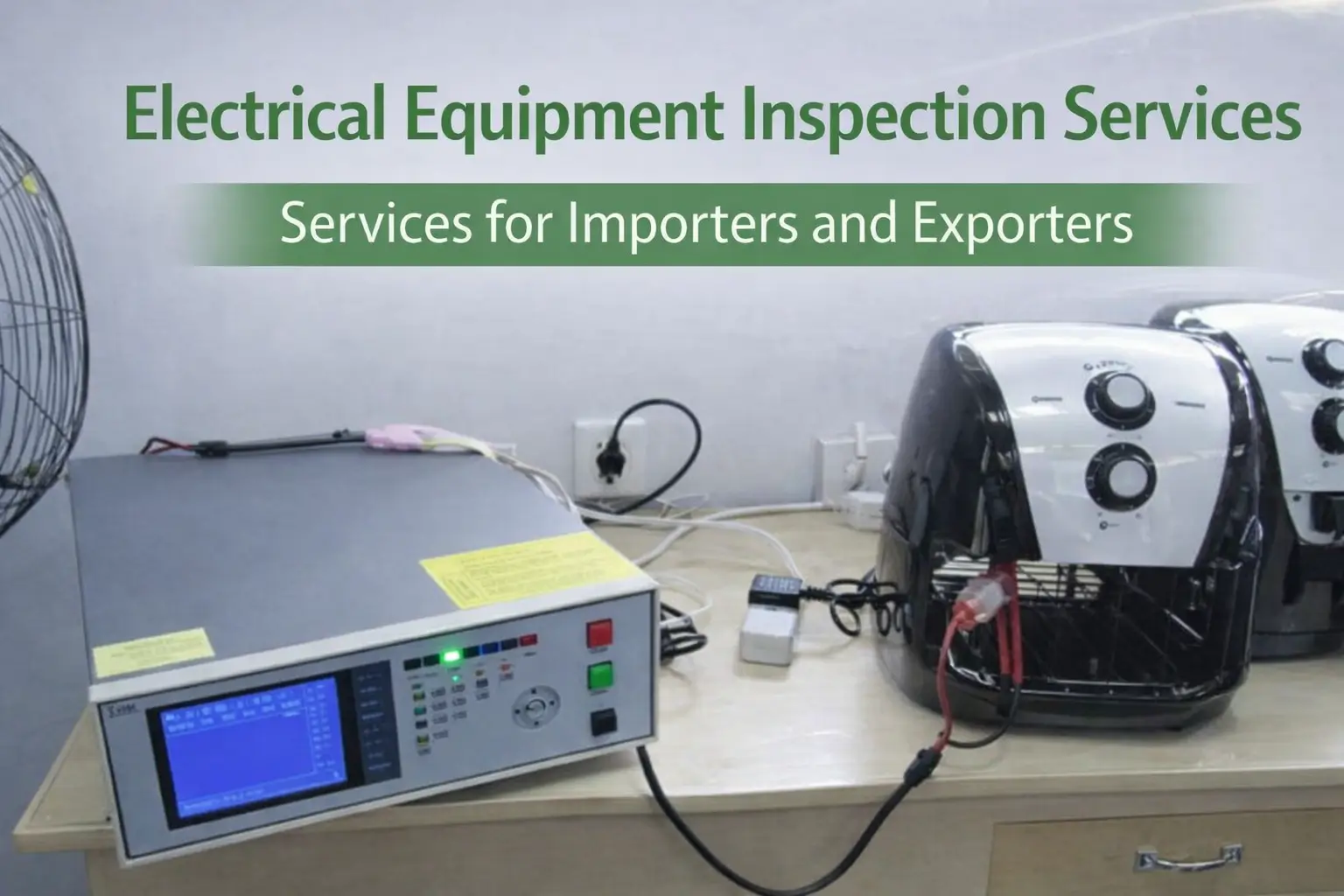
Electrical equipment inspection may sound technical, but it is essentially a systematic process for checking the safety, quality, and compliance of electrical products.
If you import or export electrical products, including consumer electronics, home appliances, lighting products, or industrial equipment, electrical equipment inspection is one of the most effective ways to mitigate risk before your products enter the U.S., EU, or other regulated markets.
This guide will explain what electrical equipment inspection entails, its importance, common standards and compliance topics, when to schedule inspections, and how to choose a reliable inspection partner.
What Is Electrical Equipment Inspection?
Electrical equipment inspection is a comprehensive review of a product’s construction, performance, and electrical safety. Typical inspection activities include:
- Visual examination to spot damage, poor workmanship, loose parts, or assembly mistakes
- Functional testing to confirm the product operates as intended
- Electrical safety checks such as insulation resistance, grounding/earth continuity, hi-pot (dielectric withstand), and leakage current testing (as applicable)
- Verification of labels and documents, ensuring ratings, warnings, and required marks are correct
- Packaging inspection to reduce transit damage and confirm accessories/manuals match the packing list
In short, inspection helps confirm the product is built correctly, works correctly, and doesn’t create avoidable shock or fire hazards.
Why Electrical Equipment Inspection Matters?
In the electronics industry, the economic and reputational losses from a single product failure far outweigh investments in rigorous quality control. Electronic products inherently carry risks; any negligence in design, assembly, or testing can lead to catastrophic consequences.
Beyond the immediate dangers of circuit failures, poor insulation, or substandard components, manufacturers face a second wave of commercial liability.
Even minor technical defects can trigger a surge in warranty claims, high return rates, and long-term brand damage, turning a small production oversight into a massive financial loss.
Beyond physical safety, a robust inspection system is the cornerstone of entering international markets and complying with regulations. For brands targeting the US and EU markets, adherence to stringent regulatory frameworks is non-negotiable.
Non-compliant materials, inconsistent power ratings, or incorrect labeling can lead to immediate operational bottlenecks, including customs seizures, rejected shipments, and product removal from major e-commerce platforms.
By implementing a proactive inspection strategy, companies can shift from a reactive, reactive approach to proactive risk management. This ensures defects are corrected at their source, enabling brands to maintain supply chain integrity and ship with confidence.
Key Elements of Electrical Inspection Services
A professional inspection service typically includes several layers of checks, not just a quick visual look.
Visual and Physical Examination
Inspectors assess the exterior and interior workmanship: housing integrity, screw tightness, wiring routing, connectors, soldering quality, and any obvious damage or contamination. For some products, IR thermography may be used to detect overheating points or loose connections during operation.
Functional Testing
Inspectors power on units and verify functions according to the product’s feature list and your requirements. This can include verifying controls, modes, displays, indicator lights, charging behavior, and basic output parameters. For complex equipment, functional checks may also include running key subsystems to confirm stable behavior.
Electrical Safety Tests
Electrical safety testing is often the most critical part of inspection. Depending on the product type and your spec, inspectors may perform:
- Insulation resistance testing
- Ground/earth continuity testing
- Dielectric withstand testing
- Leakage current checks
- Review of protective devices like fuses, breakers, and safety cut-offs
These tests help confirm the product can operate safely under normal use and basic fault conditions.
Documentation and Labeling Review
A common reason products get delayed or rejected is not “hardware failure” but labeling and documentation problems.
Inspection can verify:
- Correct voltage/frequency ratings
- Safety warnings and language requirements
- Consistent model numbers and batch/serial traceability
- Correct placement and accuracy of compliance marks and statements
- Manuals, technical documents, and any supporting test records provided by the factory
Packaging Inspection
Packaging checks ensure the product is protected for transit and that the shipment is complete: accessories, spare parts, manuals, and correct carton labels. For export shipments, this is also where you catch issues like missing inner packaging, poor cushioning, or mixed models in one carton.
Common Standards & Regulations for Electrical Equipment
Electrical products often need to satisfy different expectations depending on destination.
EU: CE Marking (and related directives)
In the EU, many electrical/electronic products require CE marking, commonly tied to safety and electromagnetic compatibility requirements such as the Low Voltage Directive and EMC Directive. Many categories also require attention to RoHS and WEEE.
U.S.: NRTL certification and market expectations
In the United States, there is no uniform “CE certification,” but many electronic products require certification from nationally accredited testing laboratories, such as UL, ETL, or CSA, depending on the product and application, due to buyer, local government, or workplace regulations.
In many business environments, even if a product appears to function correctly, the lack of accredited certification marks can hinder sales.
A practical recommendation is: inspection should verify labeling, ratings, and consistency, while certification and laboratory testing handle formal compliance. Both are important, and inspection helps ensure that obvious violations are not discovered only after shipment.
Types of Electrical Equipment Covered
Inspection providers typically cover a wide range of products, including:
- Consumer electronics(smart devices, chargers, accessories, gadgets)
- Household appliances(kitchen, cleaning, heating/cooling products)
- Lighting products(LED bulbs, fixtures, drivers, lamps)
- Industrial equipment(panels, motors, generators, switchgear, machinery)
- Electrical components(cables, power supplies, batteries, adapters)
Different types of products have different “critical points.” For example, battery-powered devices pose battery safety risks. Industrial equipment presents risks related to high performance and wiring layout. Household appliances present risks related to power safety and insulation/grounding.
When to Conduct Electrical Equipment Inspections?
Rather than inspecting only at the end, many importers use multiple checkpoints depending on risk:
Pre-Production Inspection (PPI)
Before mass production starts, verify materials/components, production readiness, and understanding of your requirements, especially useful for new suppliers or new products.
During Production Inspection (DUPRO)
Performed when production is underway (commonly when a portion of the order is completed). Helps catch process problems early, wrong components, inconsistent assembly, workmanship issues, before the full batch is produced.
Pre-Shipment Inspection (PSI)
The most common checkpoint. Conducted when goods are finished and packed. Inspectors use random sampling and check appearance, function, safety items, labeling, quantity, and packaging. PSI is your last strong control point before shipment approval.
Container Loading Inspection (CLI)
On loading day, verify correct quantities/models, container condition, loading method, and sealing. This is especially helpful for high-value or damage-sensitive electrical equipment.
Benefits of Professional Inspection Services
Using professional third-party inspection services helps you:
- Reduce safety incidents and customer complaints
- Catch defects before they turn into returns, rework, or recalls
- Improve supplier discipline and long-term quality through documented feedback
- Prevent shipping delays caused by missing labels/documents or mixed batches
- Gain transparency when you can’t be on-site
For importers/exporters, the “real value” is often simple: fewer surprises at destination.
Challenges in Electrical Equipment Inspection
Electrical equipment testing faces unique challenges, distinguishing it from ordinary consumer goods primarily due to the high risk of internal failures and the stringent nature of regulatory scrutiny.
Unlike external products, electrical defects are often hidden within internal components, undetectable to the naked eye, requiring specialized diagnostic techniques.
Success in this field demands a systematic approach to verify that critical components are not only of superior quality but also correctly installed, meeting actual assembly requirements.
Discrepancies between the physical product and technical documentation are common pitfalls that can lead to catastrophic compliance issues.
Furthermore, the effectiveness of testing is often environmentally dependent. On-site testing capabilities can be severely limited by factory conditions and the availability of sophisticated equipment.
Because safety requirements are both stringent and highly product-specific, a “one-size-fits-all” checklist is insufficient.
To effectively mitigate risk, a technically sound testing strategy must bridge the gap between theoretical design and actual production. This ensures that every connector and insulation layer meets the stringent safety standards required for global market access, providing a level of assurance far exceeding that of simple visual inspection.
Choosing the Right Inspection Provider
Choosing the right testing partner is crucial, directly impacting the integrity of your supply chain and your brand reputation. Top-tier suppliers offer more than just a simple checklist. They should possess proven expertise in your specific segment, whether it’s consumer electronics, industrial machinery, or complex electronics.
Beyond experience, their technological infrastructure is also critical. Reliable partners must use professional-grade diagnostic tools and maintain transparent testing processes, ensuring clear and unambiguous sampling methods and pass/fail criteria that comply with international safety standards.
Transparency in data reporting is another non-negotiable factor. High-quality deliverables should include comprehensive documentation, including high-resolution photographic evidence, accurate measurement data, and detailed defect classifications to support data-driven decision-making.
Furthermore, operational flexibility, characterized by broad regional coverage, rapid scheduling, and seamless communication, is essential for maintaining production schedules.
Finally, while cost is always a consideration, prioritizing value over price is paramount. Avoid choosing “cheap” services that compromise on depth to ensure your testing truly becomes a risk mitigation tool.
Ultimately, a good inspection partner can not only identify defects, but also become a strategic asset, helping you eliminate recurring defects and strengthen your global supply chain.
Conclusion
Electrical equipment inspection is a practical safeguard for global trade. It helps importers and exporters reduce risk by verifying safety, performance, labeling, and shipment readiness before products leave the factory.
In U.S. and EU markets, where compliance expectations are high, inspection is often the difference between smooth delivery and expensive problems discovered too late.
--- END ---
Products
Get A Free Quote
Related Blogs

 December 31,2025
QCC SAMPLE REPORT
For sample reports or custom checklists, please contact us – we're here to assist you.