
Final Random Inspection: Ensuring Quality Before Shipment
Nov 18,2025
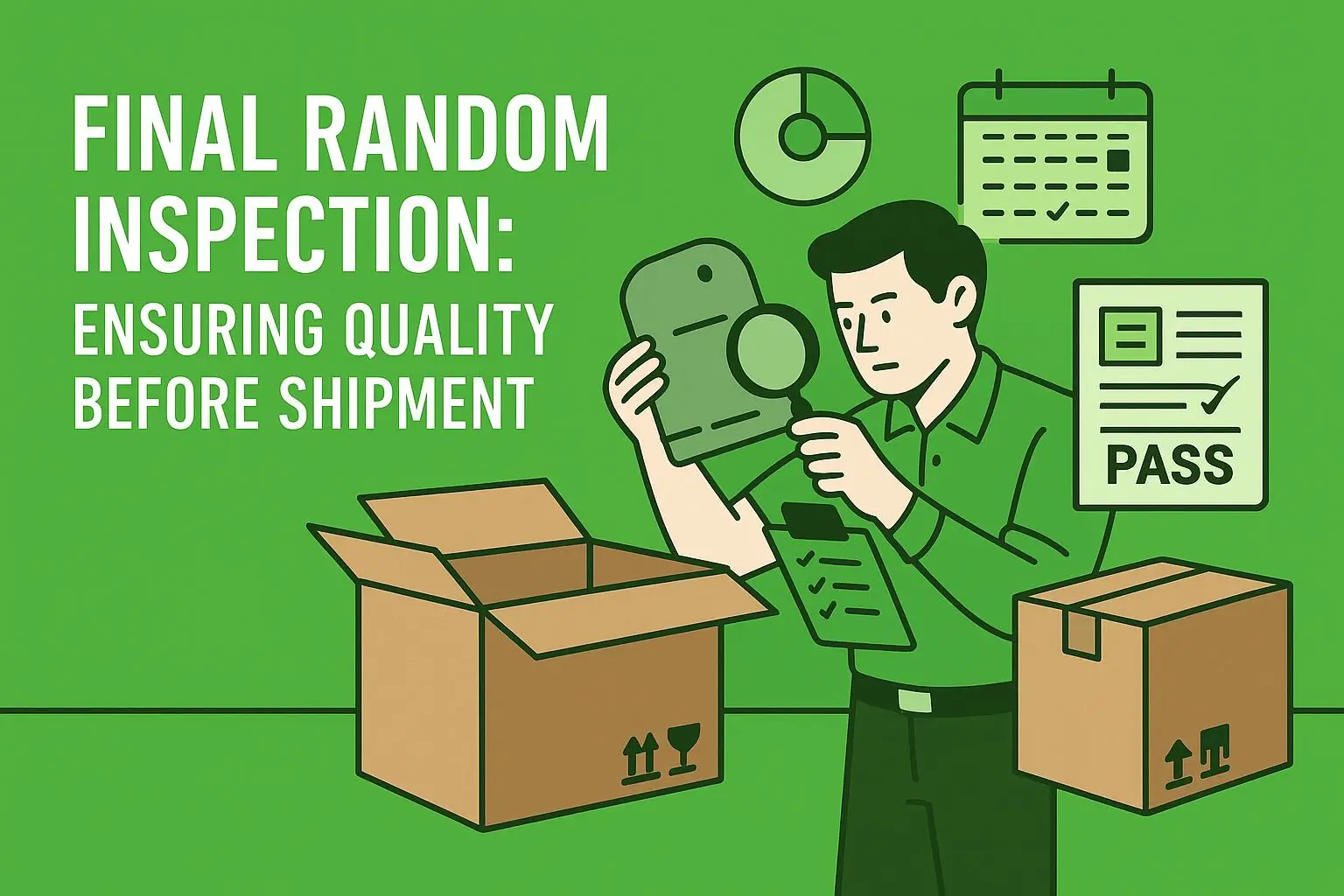
In global trade, Final Random Inspection (FRI) is often the last line of defense before goods leave the factory.
FRI (also known as Pre-shipment Inspection) is conducted after production is complete and most of the products have been packaged, and aims to check whether the goods conform to the order in terms of quality, quantity, safety, and packaging.
What Is a Final Random Inspection?
Orders are 100% complete, with at least 80% typically packaged. This process usually takes place 2-3 days before shipment at the factory or warehouse.
During the Final Random Inspection (FRI), an independent inspector uses international sampling standards to randomly select finished products from different cartons within the same batch.
Because sample selection is not influenced by the factory, it objectively reflects the quality of the entire shipment. The inspector then compares these products against your purchase order, technical specifications, and any approved samples.
A typical Final Random Inspection verifies the product’s appearance and workmanship, basic functionality, key dimensions, packaging and labeling, shipping marks, carton condition, and any visible safety or compliance issues.
The inspection results are compiled into an inspection report, which many buyers use as the basis for approving shipment and making final payments to the supplier.
Why Final Random Inspection Matters?
For many importers, skipping a Final Random Inspection is simply too risky. FRI is a safety net that catches defects at the source and confirms that mass production is consistent with your approved samples and specifications, instead of discovering problems only after the goods arrive in your warehouse.
Issues found at destination usually lead to returns, discounts, or even scrapping goods – all expensive and damaging to your brand.
FRI also helps ensure compliance and protects your cash flow. By checking labeling, warnings, packaging, and basic safety aspects, you reduce the risk of customs holds, non-compliance penalties, or product recalls.
At the same time, if inspectors find serious issues during FRI, you can hold shipment and request rework, replacement, or a commercial solution before paying the balance. Over time, regular FRIs create supplier accountability and send a clear message that quality is non-negotiable.
How a Final Random Inspection Works?
While specific details vary by product and supplier, most Factory Inspections (FRIs) follow a similar process: preparation, on-site inspection, sampling, and reporting.
Before inspection, the buyer or quality control service provider will schedule an inspection date. The inspector will review your purchase order, product specifications, standard samples, and inspection checklist to accurately understand what needs to be verified on-site.
At the factory, the inspector first confirms the quantity of completed, packaged, and ready-to-ship units. Ideally, 100% of the products have been manufactured and at least 80% have been packaged.
The inspector will compare the quantities with the purchase order and packing list to identify shortages, overproduction, or unapproved styles.
Next, random sampling is performed using AQL. The inspector draws cartons from different areas of the batch, opens them, and randomly selects units. Each selected unit undergoes inspection for workmanship and appearance defects.
Depending on the product, the inspector will also perform basic functional tests using appropriate tools and measure critical dimensions and weight. Any non-conforming or out-of-tolerance results are recorded as defects. Packaging and labeling inspections will be conducted at both the individual item and carton levels.
Inspectors will verify the inner packaging, outer boxes, seals, and pallet stacking, and confirm that labels, barcodes, and shipping marks are correct and comply with your market and purchase order requirements.
After completing all inspections, the inspector will compile the results into a structured FRI report, including quantity and condition, defect statistics categorized by severity, photographs, measurement and test results, and an overall conclusion based on your AQL standards.
Most importers will receive this report within 24 hours and use it to decide whether to ship, rework, or negotiate with the supplier.
Key AQL Concepts in FRI Quality Control
Since inspecting each unit individually is practically impractical, random inspection ultimately relies on AQL sampling.
AQL defines the maximum defect rate you are willing to accept in a batch. Inspectors use ANSI/ASQ Z1.4 or ISO 2859-1 forms, selecting the sample size based on your lot size and inspection level. The form indicates the number of “Acceptable” and “Unacceptable” defects for that sample size.
Defects are typically categorized into three levels:
Critical defects are problems that could cause harm to the user, violate regulations, or render the product unusable. Buyers typically set the AQL for critical defects to 0: if the inspector finds even one critical defect, the lot is considered unacceptable.
Major defects are serious problems that could lead to returns or complaints, such as malfunction or large scratches on a visible surface.
Minor defects are minor imperfections that do not affect safety or basic functionality. In many consumer goods projects, importers choose standards like AQL 0/2.5/4.0 to represent major, significant, and minor defects, respectively.
If the number of significant or minor defects in the inspected sample exceeds the limits specified in the AQL table, the lot will fail the Final Random Inspection (FRI).
The key is the AQL. It is statistical. Passing the final random inspection does not mean the entire order is flawless. It only indicates that, based on the inspected samples and agreed AQL standards, the overall quality level is acceptable and the risk of serious problems is relatively low.
Limitations of Final Random Inspection
Final Random Inspection (FRI) is a time snapshot based on sampling. It cannot inspect all products and only reflects the situation during the inspection period; therefore, there is always a risk that some hidden or clustered defects remain in uninspected products, or that products may be mishandled after the inspector leaves.
Furthermore, FRI is reactive: because it occurs at the end of production, serious problems discovered at this stage can lead to delays or costly rework. For complex or high-risk projects, it is generally wiser to combine FRI with earlier inspections.
Moreover, some inspections, such as detailed chemical analysis, long-term reliability testing, or full safety certification, require separate laboratory testing beyond the scope of a regular on-site FRI.
How QCC Inspection Supports Your Final Random Inspection?
Overseas quality management can be challenging. QCC Inspection helps importers and brand owners conduct reliable Final Random Inspections (FRIs) in China and across Asia, giving you peace of mind when shipping.
QCC partners with experienced full-time inspectors stationed near your suppliers. They follow clear processes, employ AQL sampling protocols, and focus on meeting your specific needs.
Before each Final Random Inspection (FRI), QCC reviews your purchase orders, product specifications, and inspection checklists, helping you refine the checklist based on past issues or industry best practices.
During the inspection, QCC inspectors verify workmanship, functionality, dimensions, packaging, labeling, and basic safety measures. All defects and nonconformities are documented with photographs and clear annotations, and you will receive a detailed, easy-to-read report with clear conclusions within 24 hours.
In addition to Final Random Inspections (FRIs), QCC Inspection also offers services such as Initial Production Inspection, In-Process Inspection, Container Loading Supervision, and Laboratory Testing Coordination. By integrating these services, you can build a more robust quality control system throughout the entire production cycle.
Conclusion
Final Random Inspection is a key step in any serious quality control strategy for importers. By checking a representative sample of finished and packed goods right before shipment, FRI helps you confirm that products meet your agreed specifications, AQL levels, and packaging and labeling requirements.
FRI cannot guarantee perfection, but it dramatically reduces the chance of serious quality problems, non-compliance, and financial loss. When combined with good supplier management, clear specifications, and earlier inspections where needed, Final Random Inspection becomes a powerful tool to keep your supply chain under control.
If you want support with Final Random Inspection (Pre-Shipment Inspection) in China or other Asian countries, QCC Inspection is ready to help. Get in touch to discuss your project and learn how a tailored FRI quality control plan can safeguard your next shipment and protect your brand.
--- END ---
Products
Get A Free Quote
Related Blogs

 December 31,2025

QCC SAMPLE REPORT
For sample reports or custom checklists, please contact us – we're here to assist you.