
Small Appliance Inspection Services: Ensuring Quality & Safety Compliance
Dec 28,2025
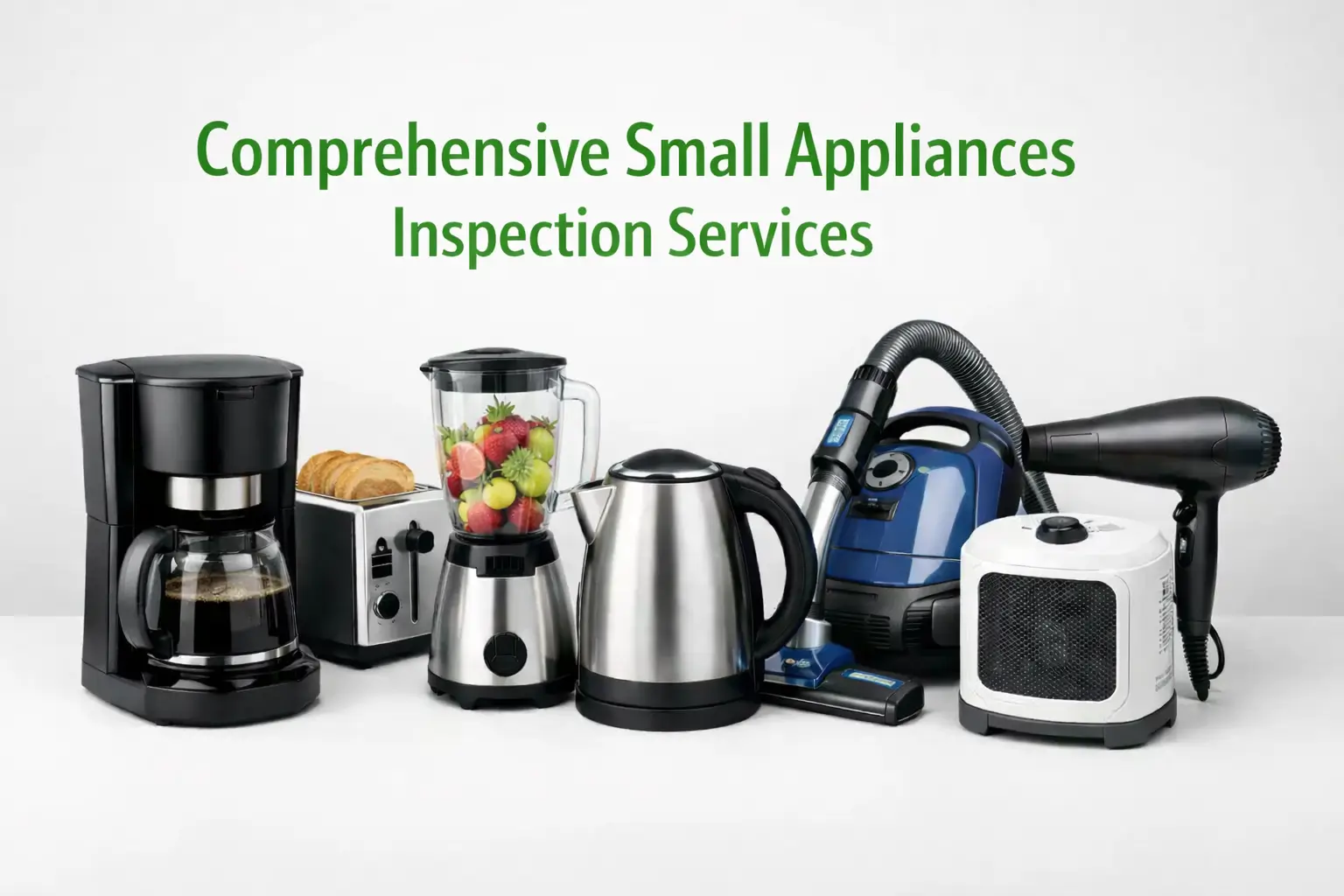
From small kitchen appliances like coffee makers and blenders to personal care devices, portable heaters, and vacuum cleaners, small household appliances play a vital role in daily life.
Ensuring the safety and quality of these products is crucial, especially for importers and retailers responsible for bringing them to market.
Every year, a large number of appliances are recalled in the US and Europe due to safety defects, resulting in economic losses and reputational damage.
These figures highlight that rigorous inspection and quality control are not merely red tape, but key measures to protect the interests of consumers and businesses.
Strict third-party inspection of small appliances helps identify problems early, preventing defective products from reaching consumers. Common defects in kitchen appliances, such as wiring faults, overheating components, or leaks, can pose serious safety hazards.
By conducting inspections during production and before shipment, importers can identify problems. These primarily include performance failures, electrical malfunctions, or poor assembly, requiring corrective action before the product leaves the factory.
This proactive approach helps reduce the risk of product returns, warranty claims, and costly recalls.
Types of Small Appliance Inspections
Effective quality control of home appliances involves multiple inspection processes during production. Professional inspection services typically offer various types of inspections to ensure consistent quality at every stage.
Pre-Production Inspection (PPI) is an initial assessment of components, materials, and factory readiness before mass production begins. Inspectors verify that incoming materials and early production samples meet specifications, confirming the factory’s ability to deliver a compliant product using approved processes.
During Production Inspection (DUPRO) is carried out when a significant portion of goods is completed. Inspectors randomly sample units from the production line to evaluate workmanship, assembly quality, and functionality. Any defects or inconsistencies identified at this stage can be corrected immediately, helping prevent systemic quality issues across the batch.
Pre-Shipment Inspection (PSI) is conducted once production is complete and most goods are packed. Inspectors select samples based on AQL standards and perform visual checks, functional tests, and safety assessments. Packaging, labeling, and documentation are also verified, making PSI the final safeguard before products are shipped.
Loading Supervision ensures the correct products and quantities are loaded into containers properly, with intact packaging and accurate shipping marks. This step reduces the risk of damage or shipment discrepancies during transportation.
100% Inspection may be applied to high-risk or high-value appliances, where every unit is checked against critical safety and performance criteria. Although time-consuming, it provides maximum assurance when zero defects are required.
By combining these inspection types, importers and retailers maintain effective control over product quality from production to shipment.
Key Inspection Standards and Regulations
Small appliances must comply with a complex framework of safety and performance standards that vary by market. Globally, the IEC 60335 series serves as the core safety standard for household electrical appliances, covering both general and product-specific requirements.
Additional IEC standards address electromagnetic compatibility to ensure appliances do not interfere with other electronic devices.
In the European Union, appliances must meet CE marking requirements, including the Low Voltage Directive, EMC Directive, RoHS Directive, and applicable energy efficiency regulations. Compliance demonstrates that products meet EU safety, health, and environmental expectations.
In the United States, appliances are subject to FCC requirements for electromagnetic emissions and widely recognized UL safety standards.
While UL certification is often voluntary, it is commonly required by retailers and considered best practice for market acceptance. Importers remain legally responsible for product safety, making compliance with recognized standards essential.
Professional inspection teams verify not only product safety and functionality, but also labeling, documentation, and certification readiness for the intended market.
Why Choose Professional Inspection Services?
Partnering with a professional third-party inspection service provides importers and retailers with unbiased, independent product evaluations. Unlike factory self-checks, third-party inspectors report objectively based on established standards, helping uncover issues that may otherwise be overlooked.
Experienced inspectors are trained to identify common appliance failure points, from heating elements and wiring to control accuracy and insulation performance.
Their inspections typically include workmanship checks, functional testing, electrical safety tests, and compliance verification. Early identification of defects reduces the risk of recalls, customer complaints, and legal liability.
Independent inspection reports also increase confidence among retailers and consumers. Many buyers require evidence of third-party quality checks before accepting products, making inspection reports a valuable commercial asset.
In addition, inspection companies provide fast scheduling, local factory coverage, and detailed reports with photos, enabling efficient supply chain decision-making.
Choosing the Right Inspection Partner
Not all inspection agencies offer the same level of expertise. Importers should select partners with proven experience in small electrical appliances, strong knowledge of U.S. and EU regulations, and reliable coverage near manufacturing sites.
Accreditation, transparent reporting, and responsive service are key indicators of a trustworthy provider.
A capable inspection partner acts as an extension of your quality team, helping enforce standards at the factory level while supporting long-term compliance and brand protection.
Conclusion
For importers and retailers, inspection of small household appliances is an essential investment. Rigorous testing not only reduces safety risks and circumvents regulatory hurdles but also effectively mitigates the substantial losses associated with product recalls.
By introducing professional third-party supervision at every stage of production, companies can not only meet standards but also build the foundation of brand integrity.
In today’s highly competitive market, a commitment to quality is not just about compliance but also about providing reliability and peace of mind, thereby earning lifelong customer loyalty.
--- END ---
Products
Get A Free Quote
Related Blogs

 December 31,2025
QCC SAMPLE REPORT
For sample reports or custom checklists, please contact us – we're here to assist you.