Ensuring Flawless Stationery: The Power of Inspection Services
Dec 19,2025
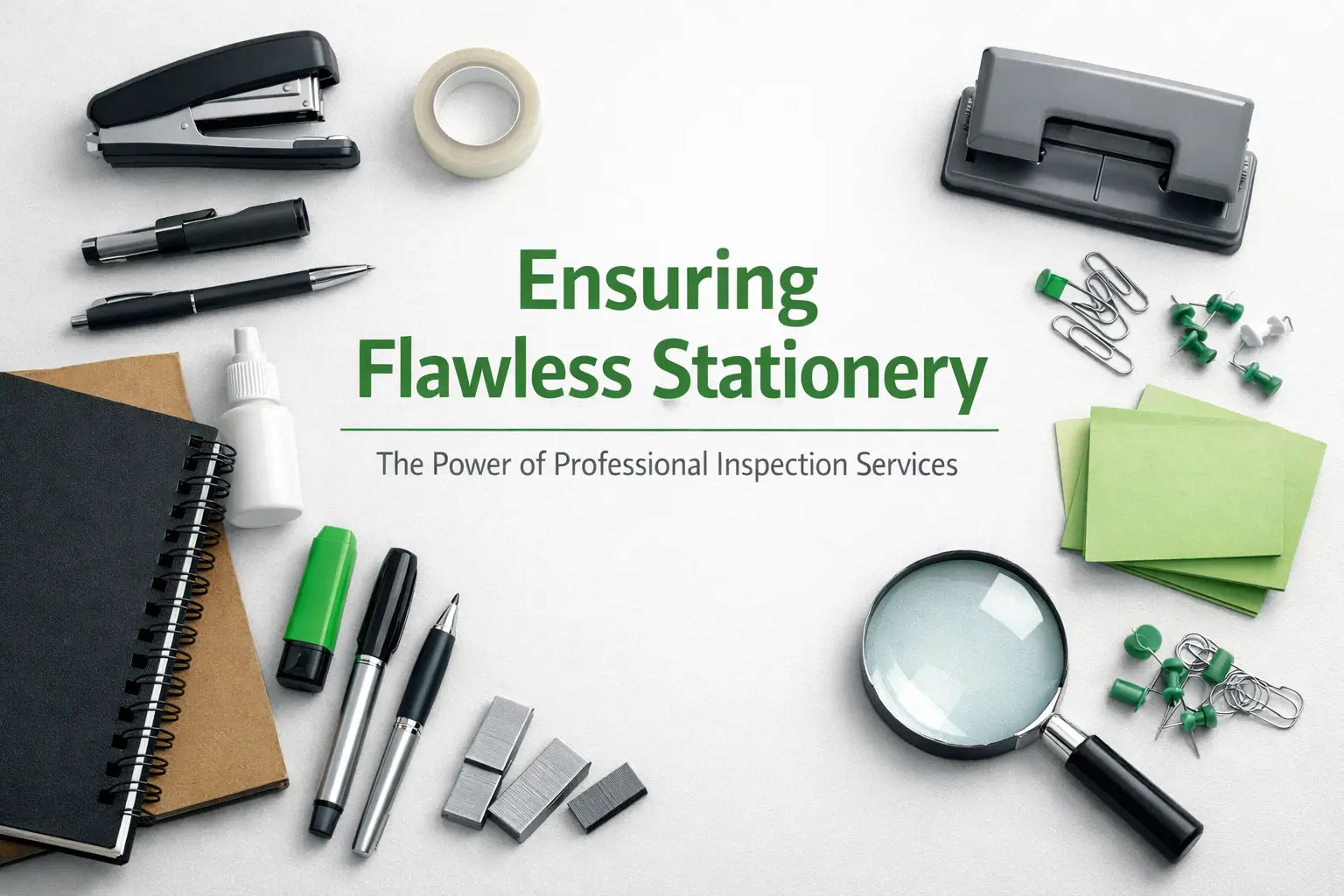
Stationery products such as notebooks, pens, glue, and office supplies may seem simple, but ensuring their quality and safety requires careful inspection.
These everyday items are widely used in offices, schools, and homes around the world, but defects can lead to safety hazards, poor user experiences, and damage to brand reputation.
Looping pens, toxic glue, or poorly bound notebooks not only frustrate users but can also result in customer complaints, regulatory issues, or high return costs. Therefore, stationery quality inspection is crucial for buyers.
This guide will explain what stationery inspection entails, its importance, common defects, inspection types, key checkpoints, US and EU compliance requirements, and how professional inspection services create value.
What Is Stationery Quality Inspection?
Stationery quality inspection is the process of evaluating office supplies to ensure they meet specified quality standards, are safe to use, and comply with applicable regulations. Inspections typically cover workmanship, functionality, materials, labeling, and packaging.
For example, inspectors may verify that pens write smoothly without leaking, notebooks are correctly printed and bound, and staplers operate without jamming. These inspections are usually conducted by independent third-party inspectors who provide an impartial assessment of product quality before shipment.
By identifying cosmetic defects, functional issues, or safety risks early, inspection helps prevent substandard stationery from reaching end users. In short, it acts as a safeguard between manufacturing and the market.
Why Quality Inspection Is Critical for Stationery?
Even basic stationery products can create serious issues if quality is overlooked.
Safety and compliance are key concerns, especially for school supplies. Poor-quality stationery may contain excessive heavy metals, unsafe chemicals, or physical hazards such as sharp edges or loose small parts. Inspection ensures products meet safety requirements and are suitable for daily use.
Performance and productivity are also affected. Pens that skip, tape that fails to stick, or staplers that jam disrupt work and learning environments. Quality inspection verifies functionality so products perform as expected.
From a cost perspective, inspection reduces long-term expenses. Catching defects before shipment avoids returns, replacements, recalls, and reputational damage. Fixing problems at the factory is far more economical than addressing them after delivery.
Finally, quality stationery reflects professionalism. Branded notebooks or promotional pens with visible defects can undermine a company’s image. Inspection protects brand value by ensuring consistency and reliability.
Common Defects in Stationery & Office Supplies
Stationery products commonly exhibit several types of defects:
Material and workmanship issues include scratches, cracks, misaligned pages, weak binding, and printing errors. These affect appearance and durability.
Functional defects are equally common. Pens may skip or leak, staplers may jam, hole punches may misalign, and adhesives may fail to bond properly. These issues directly impact usability.
Safety hazards include sharp edges, detachable small parts, and excessive chemical content in inks, plastics, or adhesives. These are particularly critical for children’s stationery.
Packaging problems such as incorrect quantities, missing components, poor protection, or labeling errors can also cause downstream issues during logistics or retail handling.
Inspections focus on identifying these problems before shipment, allowing corrective action at the source.
Types of Stationery Inspection Services
Quality control can be applied at different stages of production:
- Initial Production Inspection (IPC) checks raw materials and early samples to confirm specifications before mass production begins.
- During Production Inspection (DPI) evaluates product consistency when part of the order is completed, helping catch issues mid-process.
- Pre-Shipment Inspection (PSI) is the most common service, conducted when goods are finished and packed. Products are sampled according to AQL standards to verify quality, functionality, labeling, and packaging.
- Full (100%) Inspection may be used for high-value or high-risk items, ensuring every unit is checked.
- Container Loading Supervision (CLS) confirms correct quantities, proper handling, and safe loading at shipment.
Using the right inspection type at the right stage significantly reduces quality risks.
Key Inspection Checks for Stationery
Inspectors typically perform visual checks for appearance and workmanship, dimensional measurements, and verification of logos and printing.
Functional testing is essential. Pens are tested for ink flow, markers for smudging, adhesives for bonding strength, and office tools for smooth operation.
Safety checks focus on sharp edges, choking hazards, ventilation holes in pen caps, chemical odors, and compliance documentation for inks and plastics.
Packaging inspections include quantity checks, label verification, barcode scanning, and carton drop tests to ensure products are protected during transport.
Standards & Regulations for Stationery (U.S. & Europe)
In the United States, stationery, especially children’s products, must comply with CPSIA requirements, including limits on lead and phthalates. Art materials fall under LHAMA and ASTM D-4236 labeling rules. California Proposition 65 may also apply.
In Europe, products must meet the General Product Safety Directive. REACH restricts hazardous chemicals, while children’s stationery may fall under the Toy Safety Directive (EN 71 series). Specific standards such as ventilated pen caps are also common requirements.
Professional inspection services typically verify documentation and compliance as part of their checklist.
Benefits of Professional Inspection Services
Third-party inspections provide unbiased quality verification and reduce dependency on supplier self-checks.
They help ensure regulatory compliance, lowering the risk of customs issues, recalls, or legal exposure.
Early defect detection saves costs by preventing returns, rework, and customer dissatisfaction.
Consistent quality builds customer trust and protects brand reputation, especially for repeat orders and private-label stationery.
Common Misconceptions About Stationery Inspections
Many buyers assume stationery is low-risk, but safety and chemical hazards are real concerns, especially for children’s products.
Others rely solely on supplier QC, overlooking the value of independent verification.
Some avoid inspections due to cost, yet inspection fees are minimal compared to the cost of poor quality.
Finally, relying only on final inspection can be risky; early-stage checks often prevent larger production failures.
Choosing the Right Inspection Partner
Finding a reliable inspection partner is a key pillar of supply chain risk management. When sourcing stationery or consumer goods, partnering with suppliers possessing deep category expertise is crucial.
The true value of an inspection partner lies in their technical transparency and operational flexibility. Top-tier suppliers should offer extensive local services near your production center to ensure rapid scheduling and smooth communication.
Furthermore, the quality of the final deliverables is paramount. Ensure your partner provides comprehensive inspection reports that include high-resolution photographic evidence, accurate defect classification, and clear pass/fail conclusions. These data-driven insights are essential for making informed shipping decisions.
Ultimately, the selection process should prioritize long-term reliability and value over the lowest price, as cutting quality control costs often leads to exponentially higher costs for product recalls and brand damage.
Conclusion
Stationery may be simple, but quality expectations are not. Inspection services ensure products are safe, compliant, functional, and professionally presented.
For buyers sourcing internationally, third-party inspection is a practical safeguard that reduces risk, protects brand reputation, and ensures consistent quality. Flawless stationery is achieved not by chance, but through structured quality control and reliable inspection support.
--- END ---
Products
Get A Free Quote
Related Blogs

 December 31,2025
QCC SAMPLE REPORT
For sample reports or custom checklists, please contact us – we're here to assist you.